In the summer of 2023, the National Museum of Wildlife Art launched a major traveling exhibition, Survival of the Fittest: Envisioning Wildlife and Wilderness with the Big Four.A collaboration between Rijksmuseum Twenthe in the Netherlands and the NMWA, the exhibition honored the works of American Carl Rungius, Swede Bruno Liljefors, and Germans Richard Friese and Wilhelm Kuhnert—known as the “Big Four” in wildlife art.
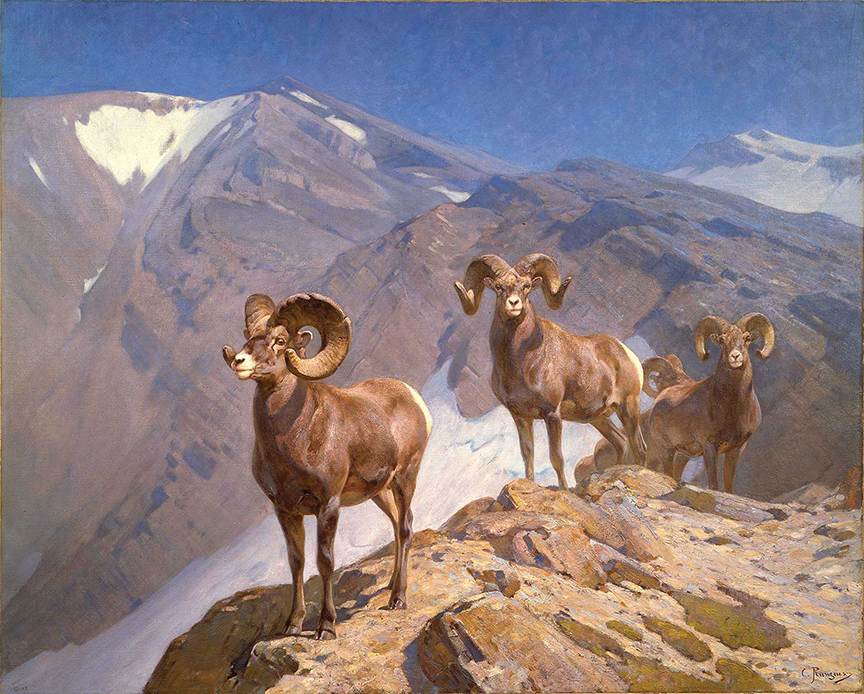 Carl Rungius (1869-1959), The Mountaineers - Big Horn Sheep on Wilcox Pass, 1912, oil on canvas, 60 x 75". Public Domain.
While the artists all lived and worked generally in the same time period, they each covered entirely separate parts of the world. But what drew them together was their emphasis on depicting animals in their natural habitats, exhibiting instinctive movements and behaviors. “Their paintings were not science-minded engravings delineating the shared characteristics of certain species, nor were they narratives illustrating biblical passages or scenes from popular fables,” the NMWA notes. “Though they emerge from and find context within these scientific and narrative backgrounds, their artwork did something remarkably different, presenting an emerging vision of wildlife that valued the animal and its habitat as two parts of a greater whole, inseparable and interdependent elements of the wild.”
“The work of these four artists established a vision of wildlife and wilderness that remains with us today and had a tremendous influence on wildlife artists of the 20th century,” says NMWA curator Adam Duncan Harris.
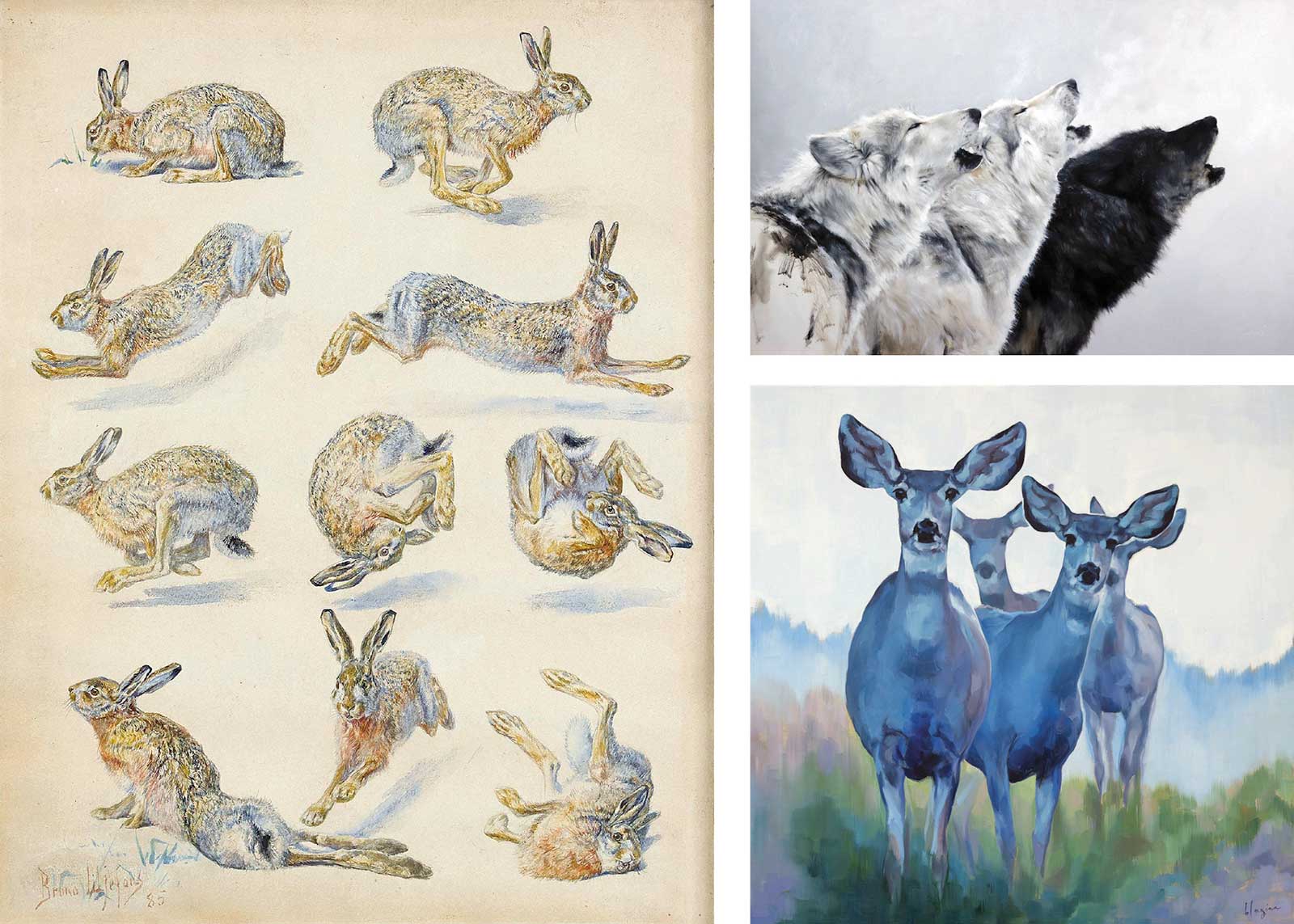
Clockwise from left: Bruno Liljefors (1860-1939), Hare studies, 1885, 12½ x 9.6". Public Domain. Gallery Wild, Winter Rhapsody, oil on canvas panel, 40 x 60", by Doyle Hostetler. Gallery Wild, Indigo Girls, oil on linen, 36 x 36", by Amber Blazina.
This vision of wildlife art that deeply values the animals themselves, as well as their interconnected ecosystems, permeates in the culture of wildlife art today. Most animal artists are also conservationists and naturalists, getting out in the field to observe their subjects directly from life. Understanding the animal and its unique behaviors is just as crucial as accurately capturing its likeness on canvas, paper or panel.
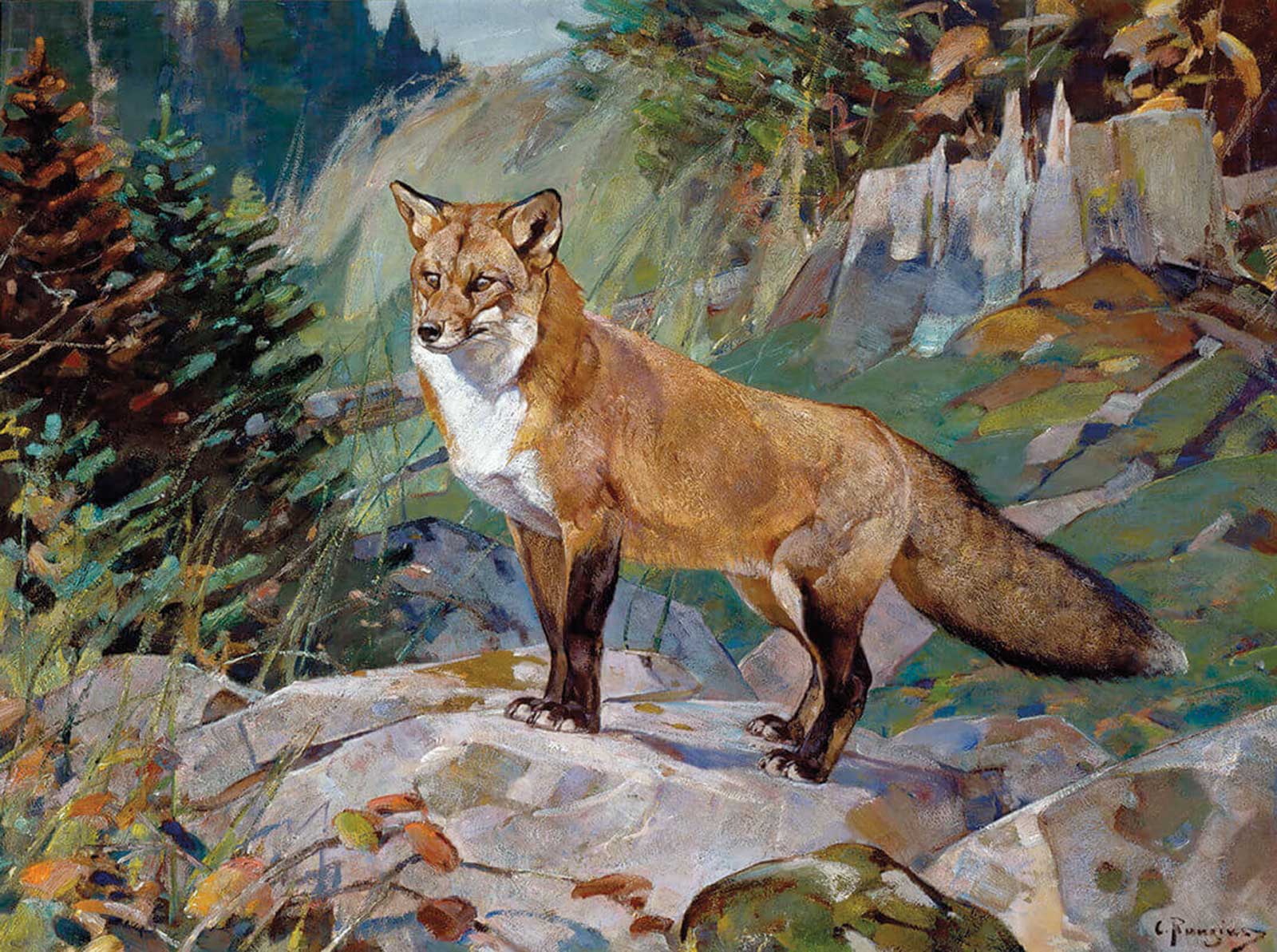
Carl Rungius (1869-1959), Red Fox, 1933, oil on canvas, 30 x 40". Jackson Hole Preserve, Museum of Wildlife Art. © Estate of Carl Rungius.
The non-profit Artists for Conservation represents nearly 500 of the world’s top nature and wildlife artists from over 30 countries, each of whom are committed to conservation. The organization hosts online and in-person shows throughout the year, including the annual Artists for Conservation Festival in Vancouver, British Columbia. A genuine love of animals radiates through the artworks of wildlife painters both past and present.
Continue moving through the pages of this collector’s focus to learn about some of the most respected galleries and artists specializing in nature and wildlife art today.
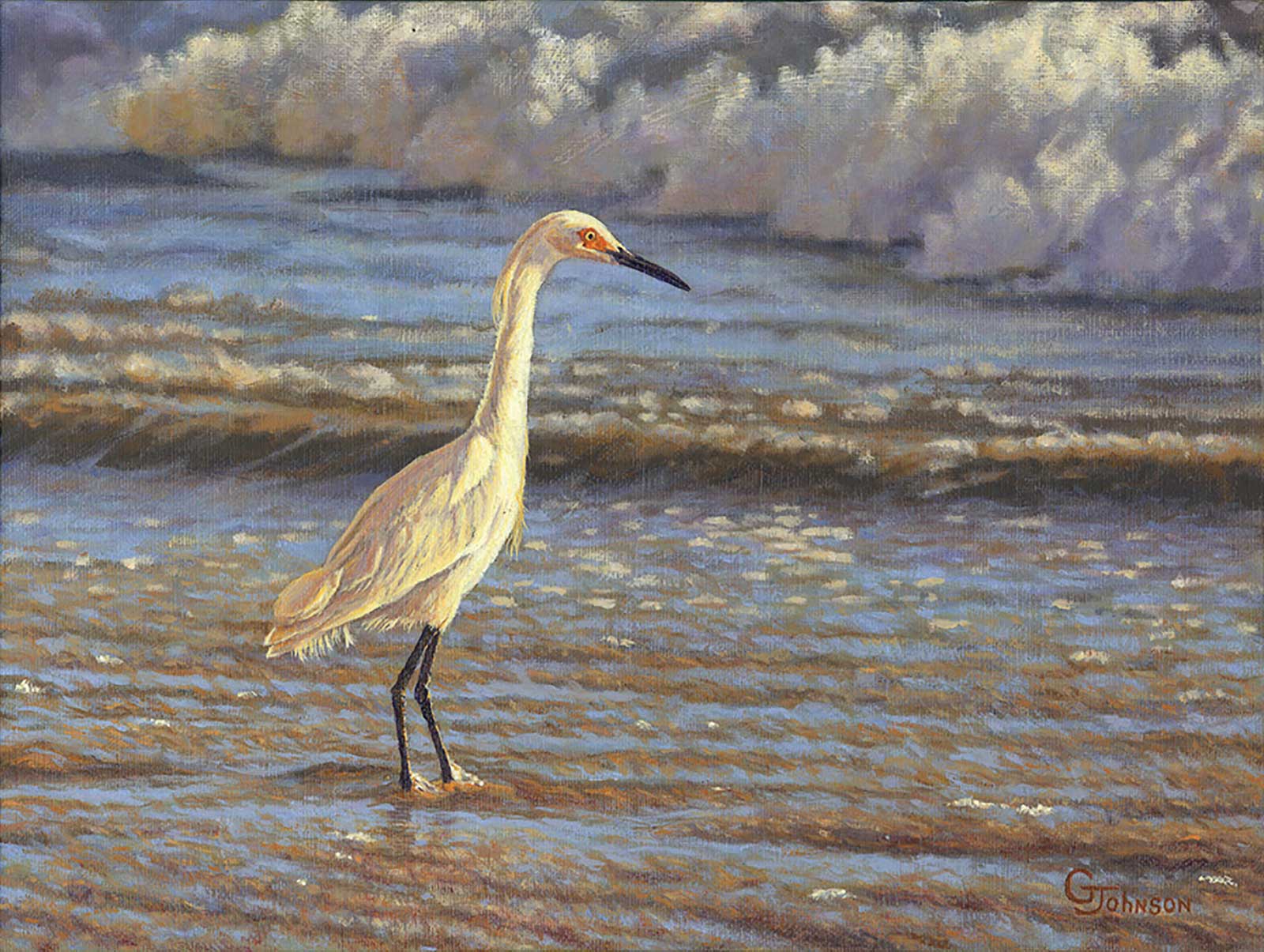
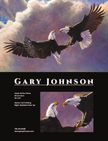
Gary Johnson, Surf Fisherman, oil, 9 x 12"
At Gallery Wild, wildlife art is more than representation—it’s a powerful connection between artist, subject and place. Founded by artists deeply rooted in the landscapes they depict, the gallery curates work that blends artistic excellence with environmental reverence. Featured artists like Amber Blazina, Doyle Hostetler and Patricia A. Griffin embody this ethos, each bringing a distinct perspective to the genre. Their paintings go beyond realism, capturing the emotion, movement and spirit of the wild through expressive brushwork and a contemporary lens. This art invites viewers to pause, reflect and reconnect with the natural world—serving as both celebration and call to conservation. For collectors, the most meaningful acquisitions come from a place of resonance. "Seek artwork that moves you, tells a story and reveals the artist’s personal bond with their subject," advises the gallery." "Authenticity and intention are what make wildlife art not only collectible, but enduringly powerful in any collection."
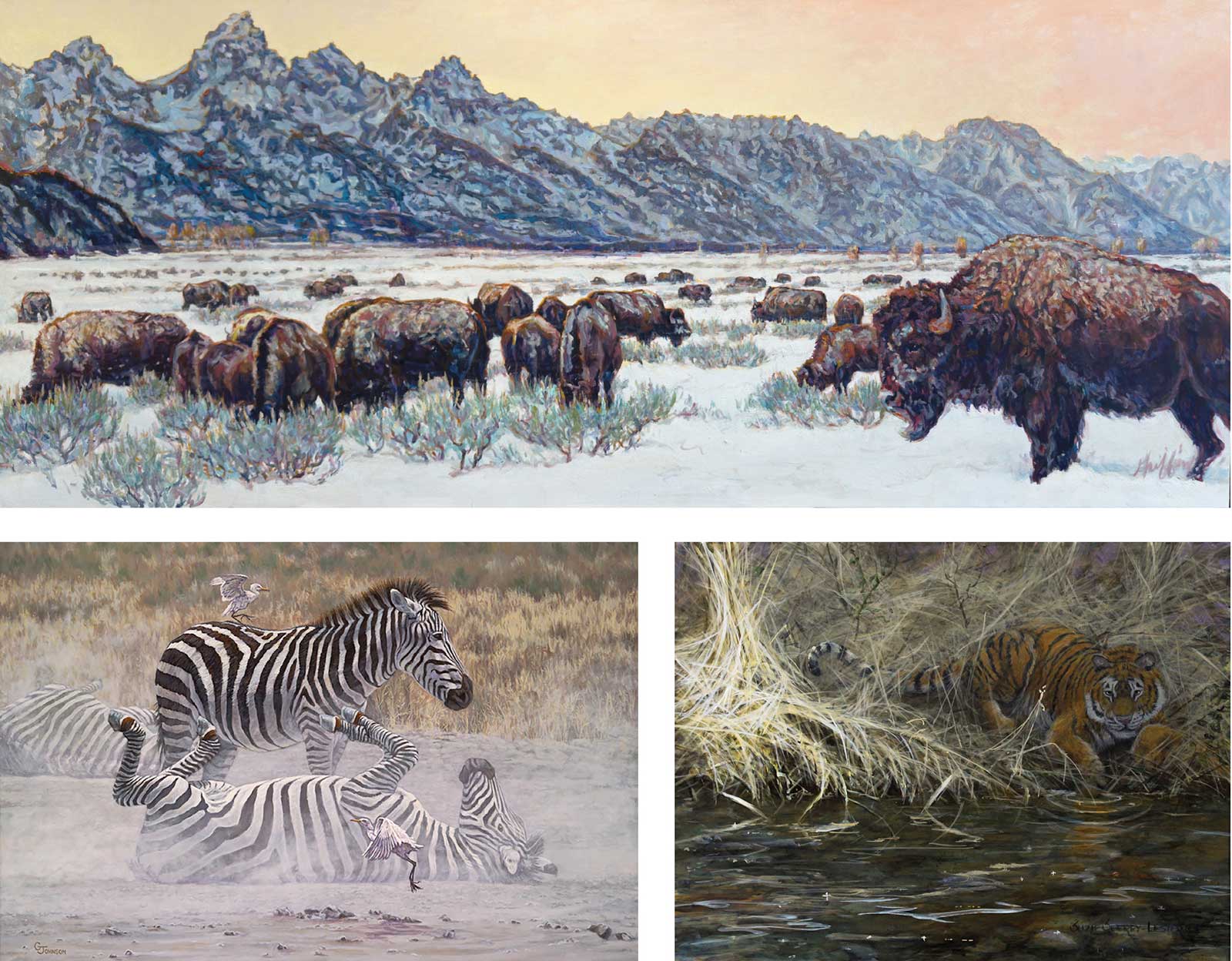
Top: Gallery Wild, -4º, oil on linen, 30 x 72", by Patricia A. Griffin. Bottom: Gary Johnson, Yin and Yang, oil, 24 x 36". Suzie Seerey-Lester, Testing the Water, acrylic, 12 x 16"
Primarily working in oil on linen and mixed media on handmade paper, the inspiration for Gary Johnson’s art comes from nature as well as the artist’s worldly travels. All three of Johnson’s paintings shown here are multiple award winners. His oil Yin and Yang was created during a trip to East Africa observing animals in the wild. “It’s very different to see animals in their natural habitat rather than a zoo. I like to have action in my composition and this one has plenty. The zebras flipping on their backs to thoroughly cover themselves in this fine dust and the cattle egrets who accompany the zebras reacting to their motion,” he says. “Head of The Herd, a portrait of a sable antelope, is one of my unique mixed media paintings on handmade mulberry paper. I came up with this technique about 30 years ago. No one else uses this same technique of painting and framing. After hours of experimenting with different mediums on handmade papers, I landed on using watercolor, gouache and pastel pencil as my process. Recently, I have been adding gold and black mica bits around the edges of the paper to create and extra dimension to the deckled torn edges of the paper. I frame each piece in a shadow box format which adds extra depth to the image. My technique gives a modern look to a traditional image,” he explains.
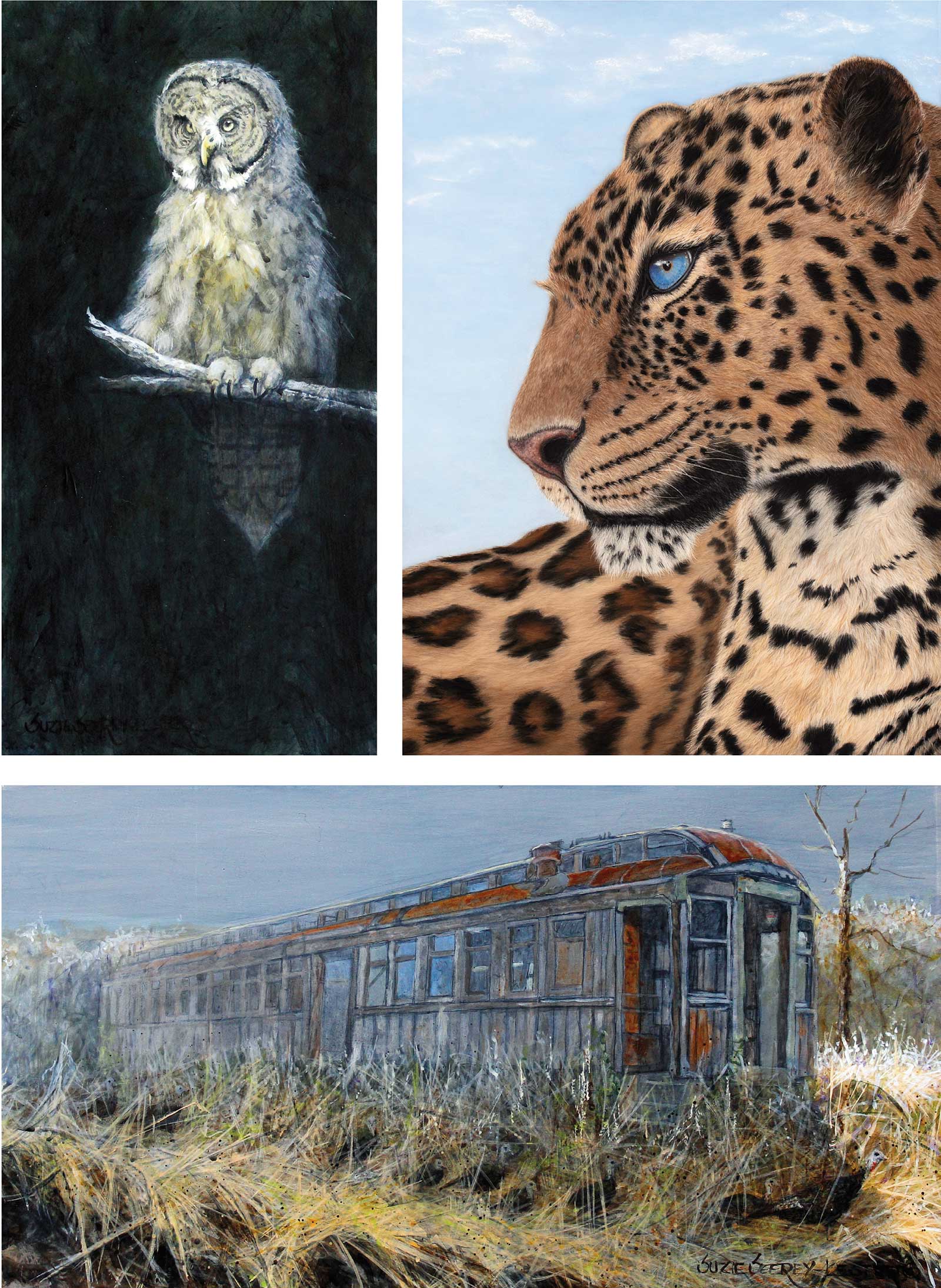
Top: Suzie Seerey-Lester, Focused, acrylic, 12 x 6". Tamara Nelson, Faith, pastel on Pastelmat, 26½ x 19". Bottom: Suzie Seerey-Lester, Ghost Train, acrylic, 8 x 15"
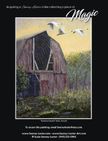
Suzie Seerey-Lester is an award-winning wildlife artist known for her barns, birds and large cats. Her mysterious backgrounds inspire collectors to discover the hidden animals within them. Recently, Seerey-Lester received the Celebrating the Natural World Award from the organization American Women Artists. She is also the recipient of the Rose Award from the Susan K. Black Foundation. The artist has traveled all over the world to capture her incredible subjects, only painting animals she’s seen in the wild with her own eyes.
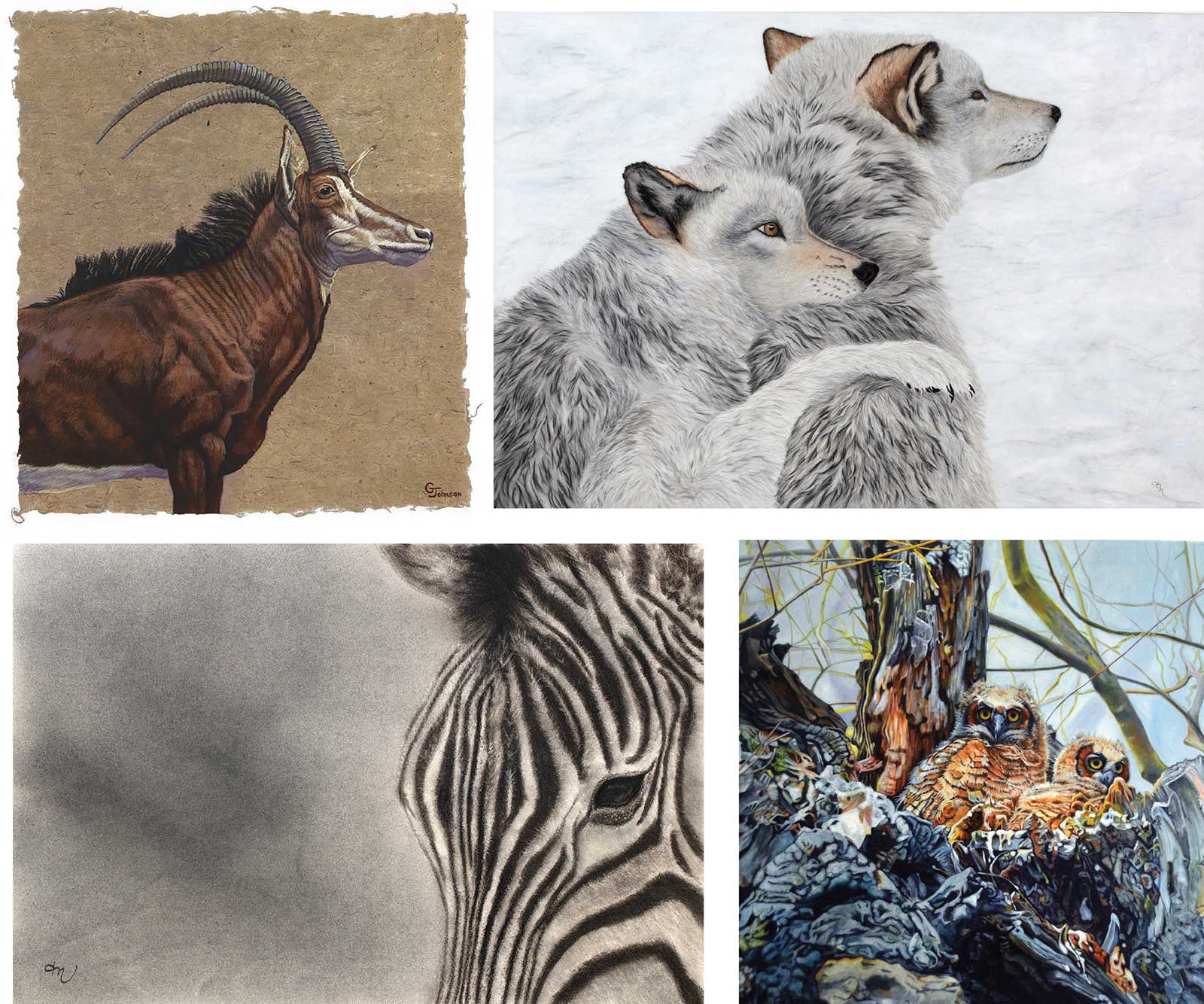
Top: Gary Johnson, Head of the Herd, mixed media on mulberry paper, 20 x 22". Tamara Nelson, Endless Love, pastel on Pastelmat board, 26½ x 38" Bottom: Tamara Nelson, Zorro, charcoal on Arches hot-pressed watercolor paper, 12 x 18". Waterfowl Festival, Great Horned Owls at Gibbons Park, oil, 24 x 24", by Kelly McNeil.
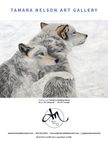
The artwork of Tamara Nelson is a celebration of the natural world. “As the owner of my own gallery in Laguna Beach, California, I am privileged to have the forum to share my love of nature and wildlife,” she says. “I seek to foster a deeper connection between people and the natural world. I strive to capture their beauty and fragility.” Working in pastel, charcoal, acrylic and oil, Nelson explores the intricate textures, colors and movement of wildlife to bring attention to the urgent need for environmental conservation and the protection of endangered animals and ecosystems. “Each brushstroke and medium I use is an expression of my deep connection to the creatures, plants and waters that sustain life on this planet,” says Nelson. “Through my art, I hope to inspire reflection and a sense of urgency about protecting the natural world.”
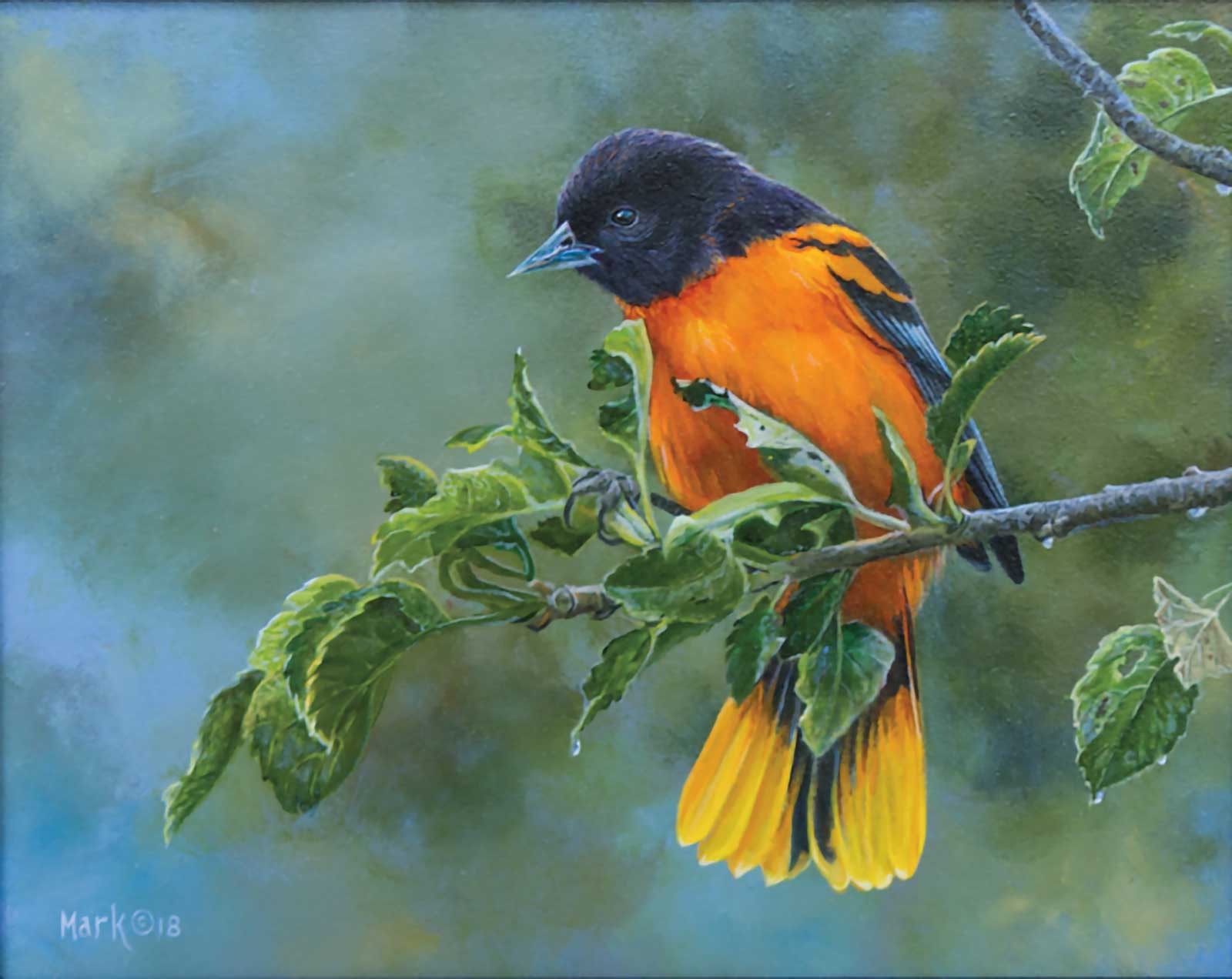
Waterfowl Festival, Spring Visitor Baltimore Oriole, acrylic, 11 x 14", by Laura Mark Finberg.
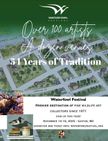
Since its founding in 1971 by a group of dedicated volunteers, the Waterfowl Festival in Easton, Maryland, has celebrated the beauty of wildlife and the artistic talents that bring nature to life. The event’s unwavering commitment to artists and wildlife art has made this event a cherished tradition, drawing thousands of collectors, enthusiasts and conservationists alike to the annual event. One of the finest of its kind in the nation, the event sells hundreds of thousands of dollars of art in just three days. Each year, Easton’s historic downtown streetscape is transformed into an incredible art gallery with multiple venues, ensuring that the tradition of wildlife art remains strong. Through these efforts, the festival not only supports the artistic community but also fosters a deeper appreciation for the natural world. This year’s festival will take place November 14 to 16. —
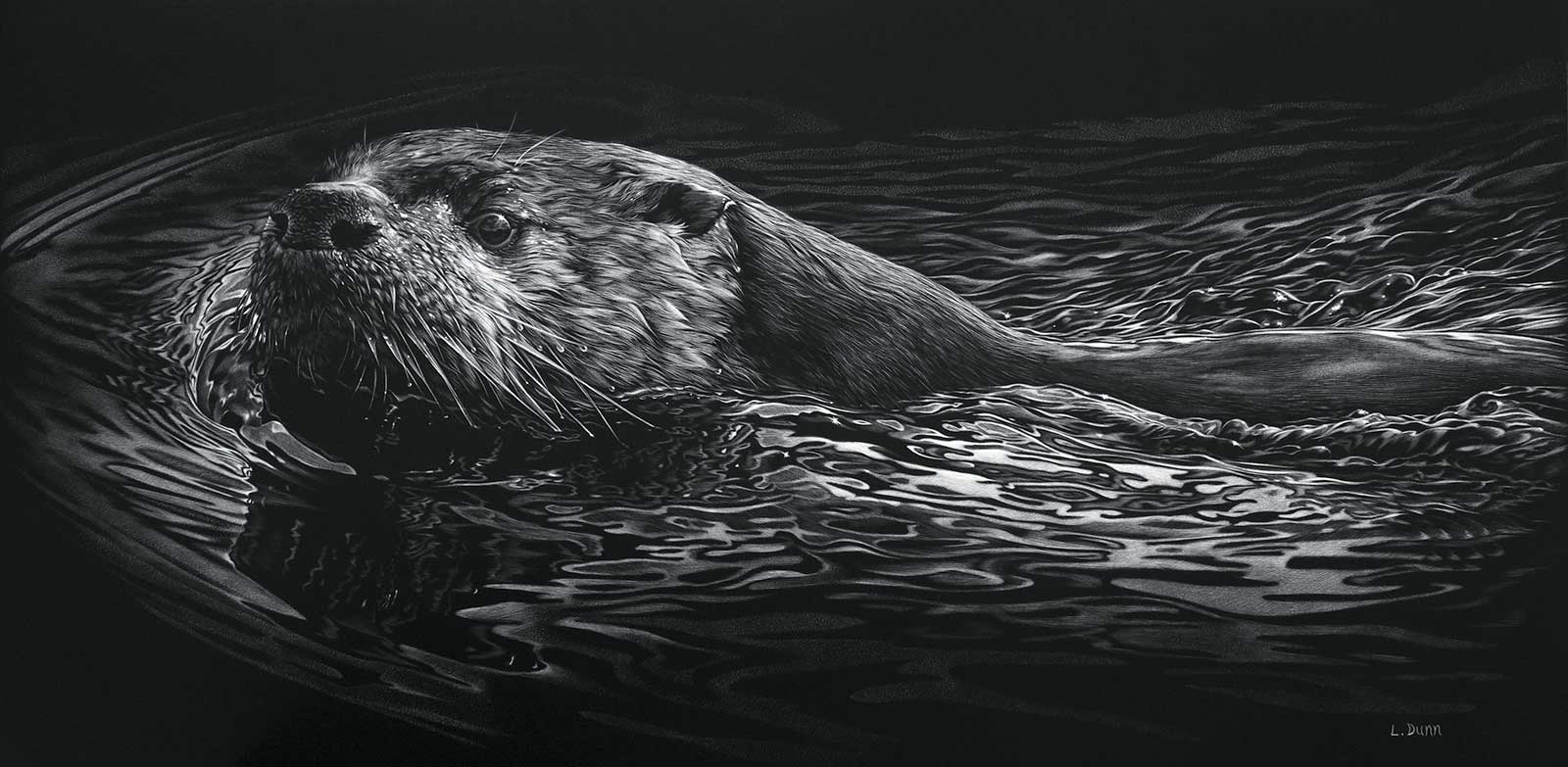
Waterfowl Festival, Go With the Flow, engraving on clayboard 10 x 20", by Lori Dunn.
Featured Artists & Galleries
Waterfowl Festival, Go With the Flow, engraving on clayboard 10 x 20", by Lori Dunn.
Featured Artists & Galleries
Gallery Wild
Jackson Hole, WY; Santa Fe, NM
(307) 203-2322
info@gallerywild.com
www.gallerywild.com
Gary Johnson
(760) 402-9986
www.garyjohnson.com
Suzie Seerey-Lester
(941) 223-0963
seereylester@msn.com
www.seerey-lester.com
www.seerey-lester-art.com
Tamara Nelson
(949) 510-6602
tamara@tamaranelsonart.com
www.tamaranelsonart.com
Waterfowl Festival
Easton, MD (410) 822-4567
facts@waterfowlfestival.org
www.waterfowlfestival.org
Powered by Froala Editor